


EV CHARGER AC 7-22KW WITH 5M CABLE (WHITE)
Same day shipping if ordered before 2pm NSW
2-Year Warranty
EV CHARGER AC 7-22KW WITH 5M CABLE (WHITE)
If you have any questions, you are always welcome to contact us. We'll get back to you as soon as possible, within 24 hours on weekdays.
-
Shipping Information
Use this text to answer questions in as much detail as possible for your customers.
-
Customer Support
Use this text to answer questions in as much detail as possible for your customers.
-
FAQ’s
Use this text to answer questions in as much detail as possible for your customers.
-
Contact Us
Use this text to answer questions in as much detail as possible for your customers.
Product details
Description
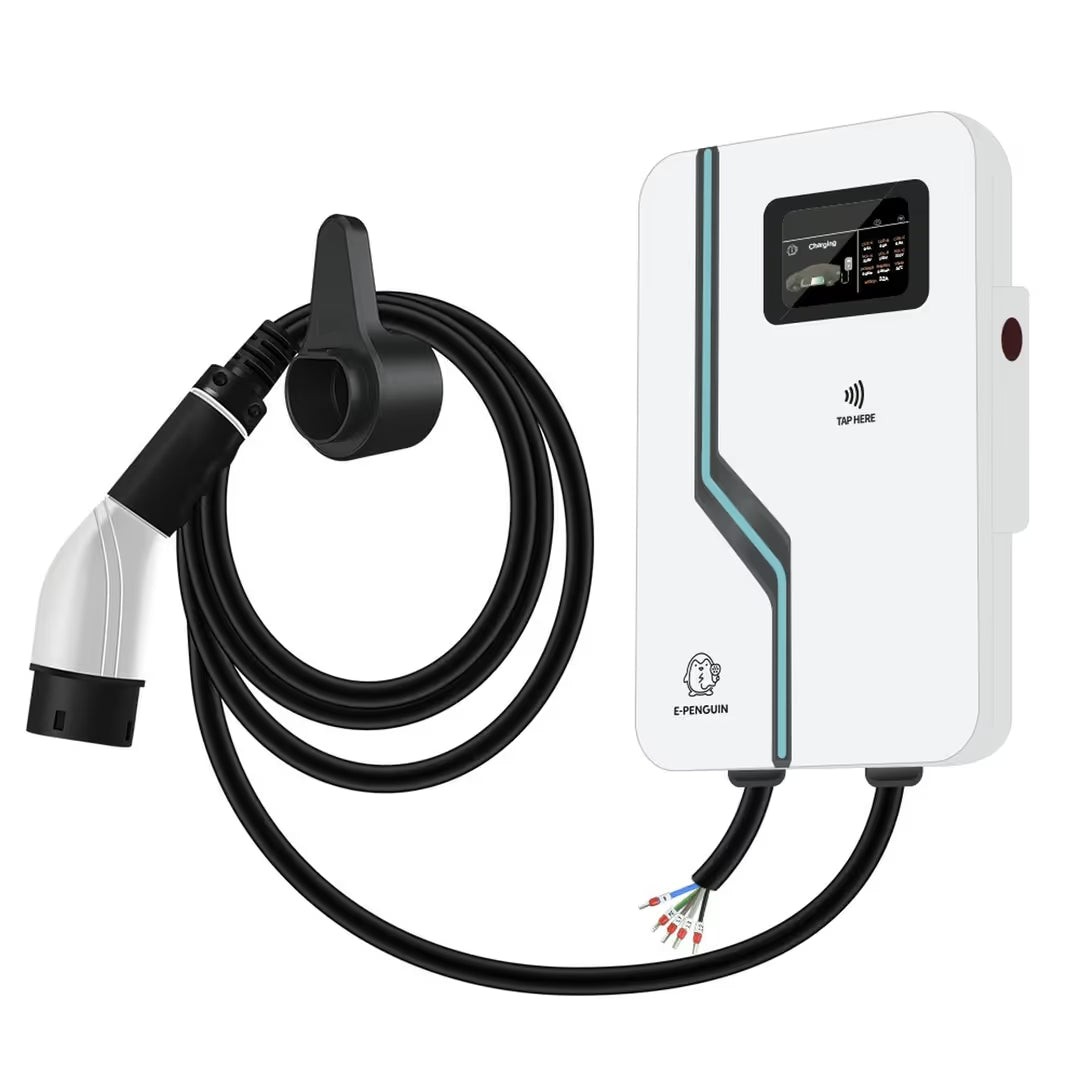
ePenguin LP-03 7.4kW / 22kW AC EV Charger
Smart, Flexible EV Charging for Home and Business
The ePenguin LP-03 AC EV Charger delivers convenient, intelligent charging in a compact, modern design. Supporting both single-phase and three-phase electrical installations, it offers charging capacity of up to 7.4kW on single phase or 22kW on three phase, making it a versatile solution for a wide range of electric vehicles.
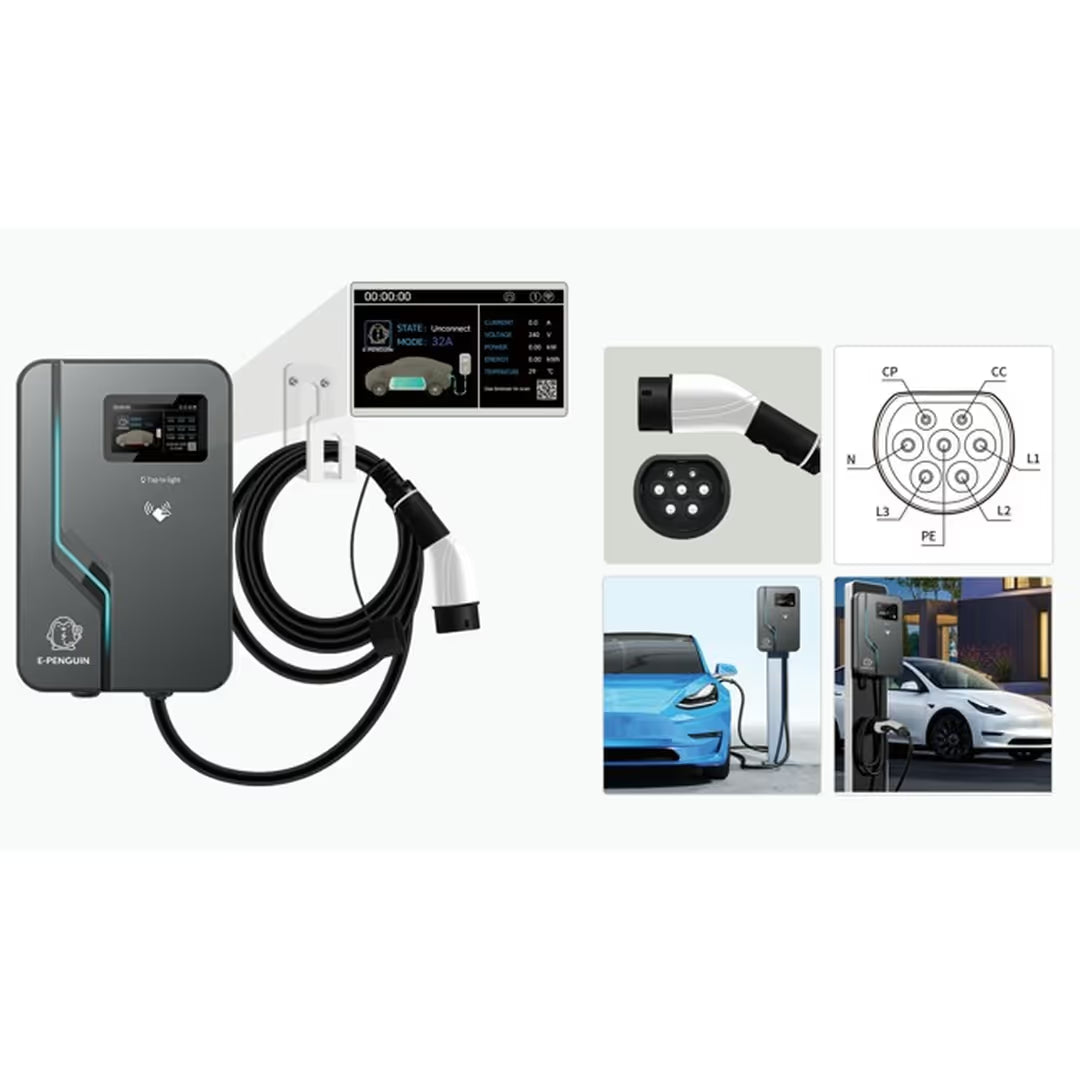
With Wi-Fi connectivity, RFID access control and intuitive charging management, the LP-03 gives you greater flexibility and control over your everyday EV charging.
Smart Charging Made Simple
Manage your charging experience with a range of convenient features:
-
Flexible charging options: Supports 240V single-phase 32A and 400V three-phase 32A installations.
-
Wi-Fi connectivity: Access the web app to configure settings, monitor energy usage and manage charging sessions.
-
Scheduled charging: Set your preferred charging start time to suit your routine.
-
RFID access control: Authorise charging sessions using RFID identification.
-
Charging mode selection: Choose from available charging modes to suit your requirements.
-
Live status display: View charging progress and fault information on the built-in display.
-
LED status indicator: Quickly identify the charger's operating status at a glance.
-
Simple operation: Start and stop charging sessions through the supported controls.
Designed for Everyday Reliability
Built for practical use, the ePenguin LP-03 combines a space-conscious design with features suited to residential and commercial charging environments.
-
Weather-resistant enclosure: IP65 protection when properly mated, with an IP55 rating when unmated, subject to the manufacturer's specified conditions.
-
Flexible mounting: Suitable for wall or compatible column/pedestal mounting.
-
Wide operating range: Designed to operate in temperatures from -30°C to +50°C.
-
Low standby consumption: Less than 5W in standby, according to the stated product specifications.
-
Natural cooling: Uses natural cooling rather than active fan cooling.
-
Integrated safety features: Multiple electrical protection and fault-detection functions help support safe, reliable operation.
Integrated Electrical Protection
The LP-03 incorporates protection features designed to help safeguard the charger and support dependable operation, including:
-
Overvoltage and undervoltage protection
-
Overcurrent protection
-
Residual-current protection
-
6mA DC residual-current detection
-
Earthing protection
-
Overtemperature protection
-
Surge protection
-
Control Pilot (CP) fault detection
The charger also incorporates RCD protection. Installation must follow the manufacturer's instructions and all applicable electrical requirements.
Product Specifications
| Feature | Specification |
|---|---|
| Product | ePenguin LP-03 AC EV Charger |
| Maximum charging current | 32A |
| Maximum charging capacity | Up to 22kW |
| Single-phase output | Up to 7.4kW |
| Three-phase output | Up to 22kW |
| Supply compatibility | 240V single phase / 400V three phase |
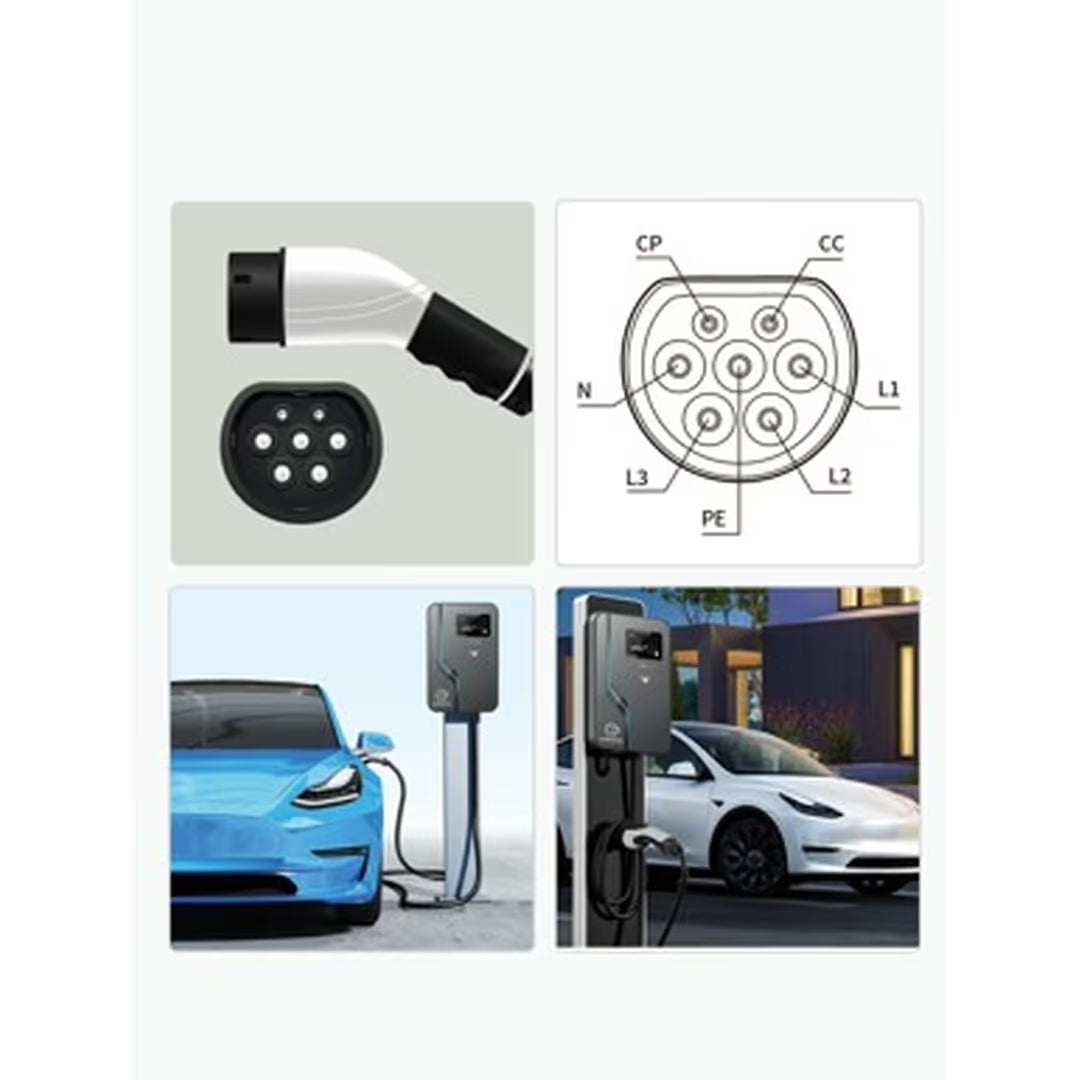
| Connector | Type 2, EN 62196-2 compliant |
| Mounting | Wall or compatible column/pedestal |
| Enclosure protection | IP55 unmated / IP65 mated |
| User interface | LED/LCD display, RFID and Wi-Fi |
| Cooling | Natural cooling |
| Standby power | Less than 5W, as specified |
| Input cable | 1 metre, as specified |
| Operating temperature | -30°C to +50°C |
| Product weight | 6.5kg |
| Product dimensions | 500 × 340 × 220mm |
| Packaged dimensions | 50 × 34.5 × 20cm |
| EAN | 9319236803257 |
| Additional barcode | 59319236803252 |
Charging performance depends on the vehicle's onboard charger, available electrical supply and installation configuration.
Important Installation and Compatibility Information
Professional installation is required. The charger must be installed by a licensed electrician in accordance with the manufacturer's instructions and applicable electrical requirements.
Before purchasing, check your vehicle's maximum AC charging capacity. A charger rated for 22kW will not automatically deliver 22kW to every EV. The actual charging rate is limited by the vehicle's onboard charger and the available electrical supply.
For example, some BYD Atto 3 configurations support approximately 7kW on single-phase AC, while many Tesla Model 3 and Model Y configurations can accept up to 11kW on three-phase AC. Specifications vary by model and year, so confirm your vehicle's requirements before installation.
Why Choose the ePenguin LP-03 from ClickQu?
Enjoy a more connected and convenient approach to EV charging with a charger designed to combine flexible installation options, smart charging controls and integrated electrical protection.
Whether you're setting up charging at home or planning an installation for a suitable business environment, the ePenguin LP-03 offers a versatile platform for everyday electric vehicle charging.
ClickQu — smarter solutions for your electric driving needs.
Need Help?
Here we answer the most common questions. If you can't find the answer to your question below, please contact us.
How much does it cost to install an EV charger at home?
Cost of installation varies depending on many factors, such as: Are you installing a single phase or three phase charger? How old is your home? Where do you want the charger located? Do you want any extra accessories or features with your charger (e.g. mounting it, connecting to solar panels, etc.)?
What kind of charger best suits my situation?
You may want to consider how much you drive, as this can determine whether you need single phase or three phase charging. Single phase charging being cheaper providing a slower charge whereas three phase provides a much faster charge, better suited for someone who is always driving. You must also consider what your switchboard in your home allows as not all switchboards can support three phase charging.
What's the difference between AC/DC charging?
AC (Alternating current) charging utilises the on-board AC to DC power converter that is connected to your EV battery to charge your car.
- Available in single-phase and 3-phase charging
- More cost-effective solutions
DC (Direct current) Charging performs AC to DC power conversion outside of the EV and is more used for commercial settings.
- Units are much larger due to housing a much larger AC-DC power converter than the converter in your car
- Greater charging range and capacity (20kWh-150kWh)
- Charging times are much faster than AC charging
- DC Charging leads connect directly to your battery
What is the difference between a 7kW charger and a 22kW charger?
The key difference between 7kW and 22kW chargers comes down to charging speed and the type of power supply they use. A 7kW charger runs on single phase power. It charges much slower than a 22kW unit, but it’s the most common option for homes since most switchboards only support single phase. A 22kW charger uses three phase power. It can deliver much faster charging, but it’s only suitable for homes that already have a three-phase setup. Ultimately, your vehicle’s onboard charger determines how much power it can accept, regardless of the charger’s maximum output.