

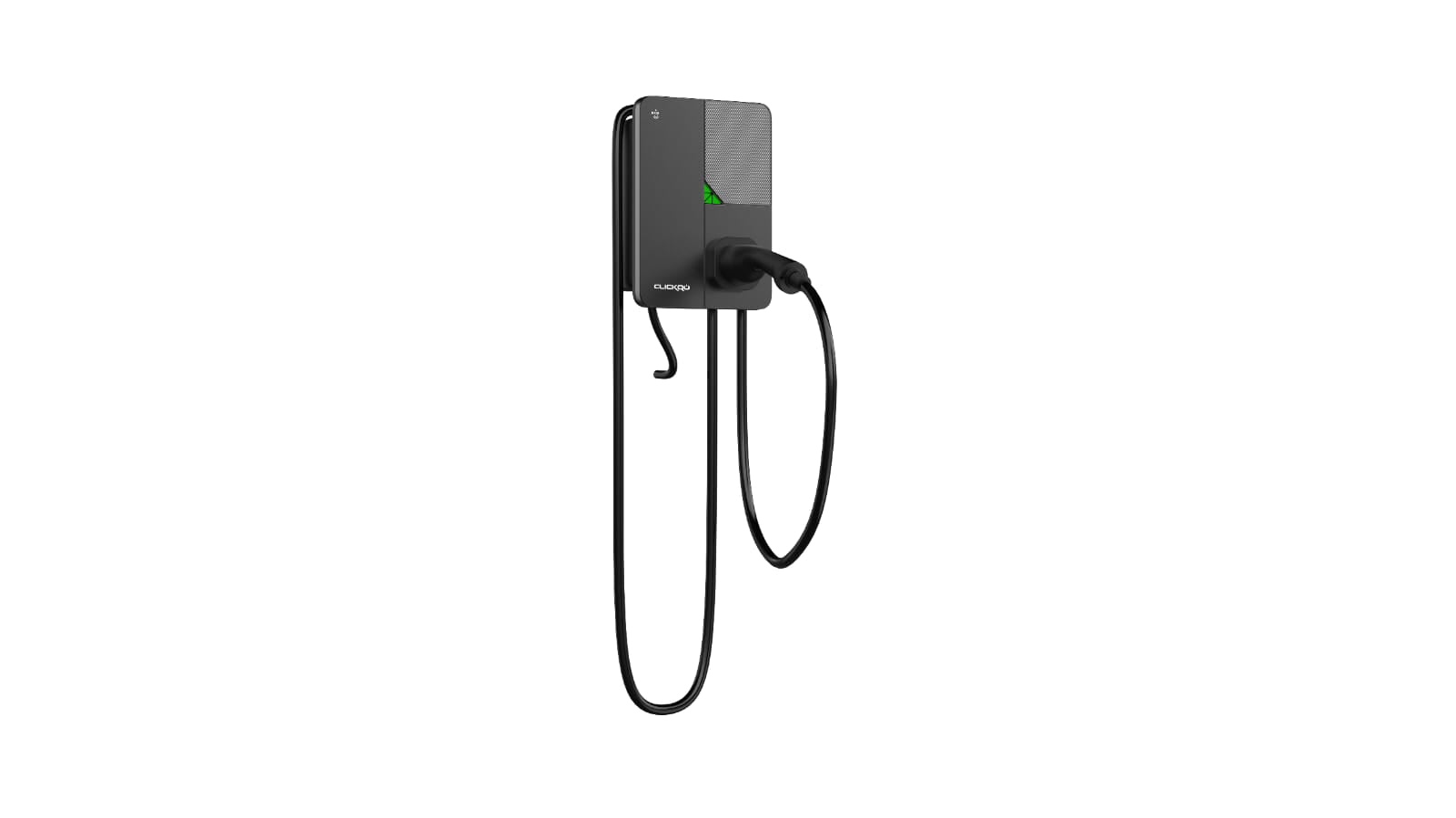
ClickQu - 7kW AC Wall Charger
Same day shipping if ordered before 2pm NSW
2-Year Warranty
If you have any questions, you are always welcome to contact us. We'll get back to you as soon as possible, within 24 hours on weekdays.
-
Shipping Information
Use this text to answer questions in as much detail as possible for your customers.
-
Customer Support
Use this text to answer questions in as much detail as possible for your customers.
-
FAQ’s
Use this text to answer questions in as much detail as possible for your customers.
-
Contact Us
Use this text to answer questions in as much detail as possible for your customers.
Product details
Description
Power Your EV with Simplicity and Reliability
The ClickQu 7 kW Single Phase Wall Charger delivers a fast, safe, and hassle-free charging experience for your electric vehicle. Designed for home or small commercial installation, this charger offers a dependable 7 kW charging rate with a permanently attached Type-2 cable, making each charging session as simple as plug-and-go.
Key Features
-
7 kW Single Phase Output
Provides a robust 7 kW output to charge your EV quickly and efficiently — ideal for overnight charging or daily top-ups. -
Tethered Type-2 Cable
Includes a built-in Type-2 connector cable, so there’s no need to carry separate cords. Just plug in your EV, and you're ready to charge. -
Compact & Wall-Mountable Design
The compact housing makes it easy to mount on a wall in a garage, carport, or driveway, saving space and keeping things tidy. -
Durable Construction
Built to withstand regular use and outdoor conditions — designed for weather resistance and longevity. -
Built-In Safety Protections
Includes critical protection features like overload protection, short-circuit protection, and proper insulation to keep both your car and electrical system safe. -
Cost-Effective Charging
At 7 kW, it strikes a strong balance: significantly faster than a portable charger, but more affordable and easier to install than high-power commercial units. -
Energy Efficiency
Designed to deliver power efficiently, minimising energy loss during charging.
Need Help?
Here we answer the most common questions. If you can't find the answer to your question below, please contact us.
How much does it cost to install an EV charger at home?
Cost of installation varies depending on many factors, such as: Are you installing a single phase or three phase charger? How old is your home? Where do you want the charger located? Do you want any extra accessories or features with your charger (e.g. mounting it, connecting to solar panels, etc.)?
What kind of charger best suits my situation?
You may want to consider how much you drive, as this can determine whether you need single phase or three phase charging. Single phase charging being cheaper providing a slower charge whereas three phase provides a much faster charge, better suited for someone who is always driving. You must also consider what your switchboard in your home allows as not all switchboards can support three phase charging.
What's the difference between AC/DC charging?
AC (Alternating current) charging utilises the on-board AC to DC power converter that is connected to your EV battery to charge your car.
- Available in single-phase and 3-phase charging
- More cost-effective solutions
DC (Direct current) Charging performs AC to DC power conversion outside of the EV and is more used for commercial settings.
- Units are much larger due to housing a much larger AC-DC power converter than the converter in your car
- Greater charging range and capacity (20kWh-150kWh)
- Charging times are much faster than AC charging
- DC Charging leads connect directly to your battery
What is the difference between a 7kW charger and a 22kW charger?
The key difference between 7kW and 22kW chargers comes down to charging speed and the type of power supply they use. A 7kW charger runs on single phase power. It charges much slower than a 22kW unit, but it’s the most common option for homes since most switchboards only support single phase. A 22kW charger uses three phase power. It can deliver much faster charging, but it’s only suitable for homes that already have a three-phase setup. Ultimately, your vehicle’s onboard charger determines how much power it can accept, regardless of the charger’s maximum output.